
Pokopia Crafting Materials Guide: Where to Find Every Core Resource
Pokopia progression is basically a crafting economy. If you know which materials are true bottlenecks (and where to farm them efficiently), you build faster, unlock Habitats sooner, and avoid the “farm the wrong thing for an hour” trap.
This hub guide is designed to be your one-page material index. Each material below includes:
- A short “why you care”
- A link to the dedicated how-to article
- A link to the item database entry
- 1–2 representative recipe links (when the local dataset includes them)
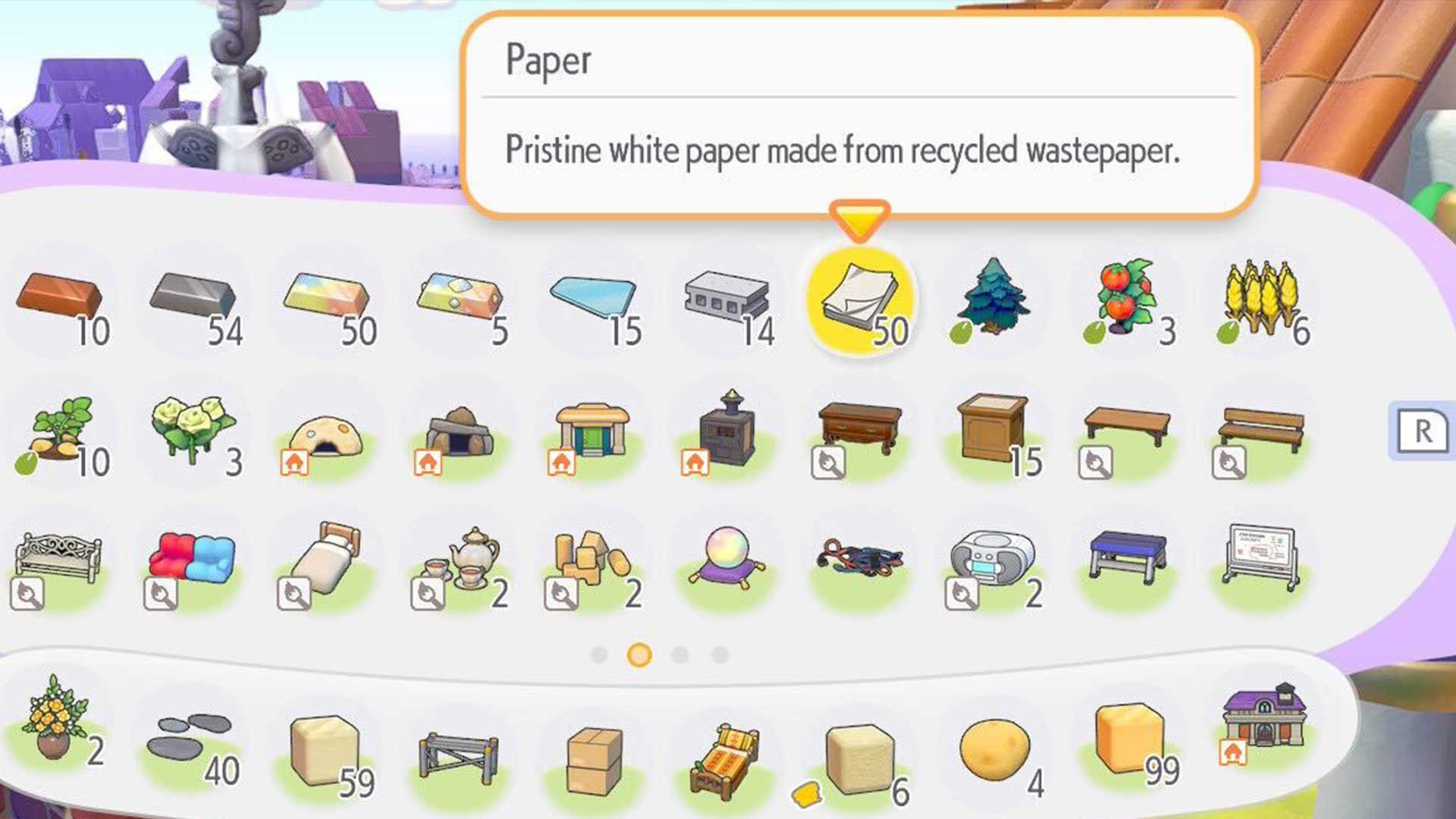
Materials at a glance (icons)







Recipe usage snapshot (local database)
These counts come from the on-site recipe dataset. Some cooking recipes may not be covered yet, which is why Wheat can show as 0 even though it matters in-game.
| Material | Recipes using it |
|---|---|
| Lumber | 151 |
| Twine | 96 |
| Papers | 120 |
| Squishy clay | 19 |
| Brick | 18 |
| Concrete | 15 |
| Smooth Rock | 0 |
| Wheat | 0 |
Priority recommendations
- Early-game must-farm: Lumber, Twine, Wastepaper → Paper/Papers, Squishy Clay (then convert to Bricks when you can)
- Mid-game spikes: Bricks and Concrete (big build parts tend to ask for these in bursts)
- Nice-to-have buffers: Smooth Rock (small requests can block you at awkward times), Wheat (stabilizes cooking/farming loops)
Core material categories in Pokopia
- Wood & basics: Lumber, Twine, Paper/Papers
- Farming & food: Wheat
- Building & stone: Squishy Clay, Brick, Smooth Rock, Concrete
Where to find each major material (hub links)
Lumber (wood backbone)

Lumber is the first “real” crafting bottleneck: it powers storage, utilities, and a huge share of early builds. If you’re unsure what to farm first, start with Small Logs → Lumber so you can place Storage Boxes and speed up every other route.
- How-to guide: How to Get Lumber in Pokopia
- Item page: Lumber (and Small Log)
- Recipe examples: Storage Box, Sign
Twine (utility + décor blocker)
Twine tends to “quietly” block progress because it’s consumed by lots of small builds across many themes. The best strategy is to always pick it up incidentally while you’re pathing through ruins/abandoned areas.
- How-to guide: How to Get Twine in Pokopia
- Item page: Twine
- Recipe examples: Grass flooring, Puffy-tree pillar
Paper vs Papers (and Wastepaper)
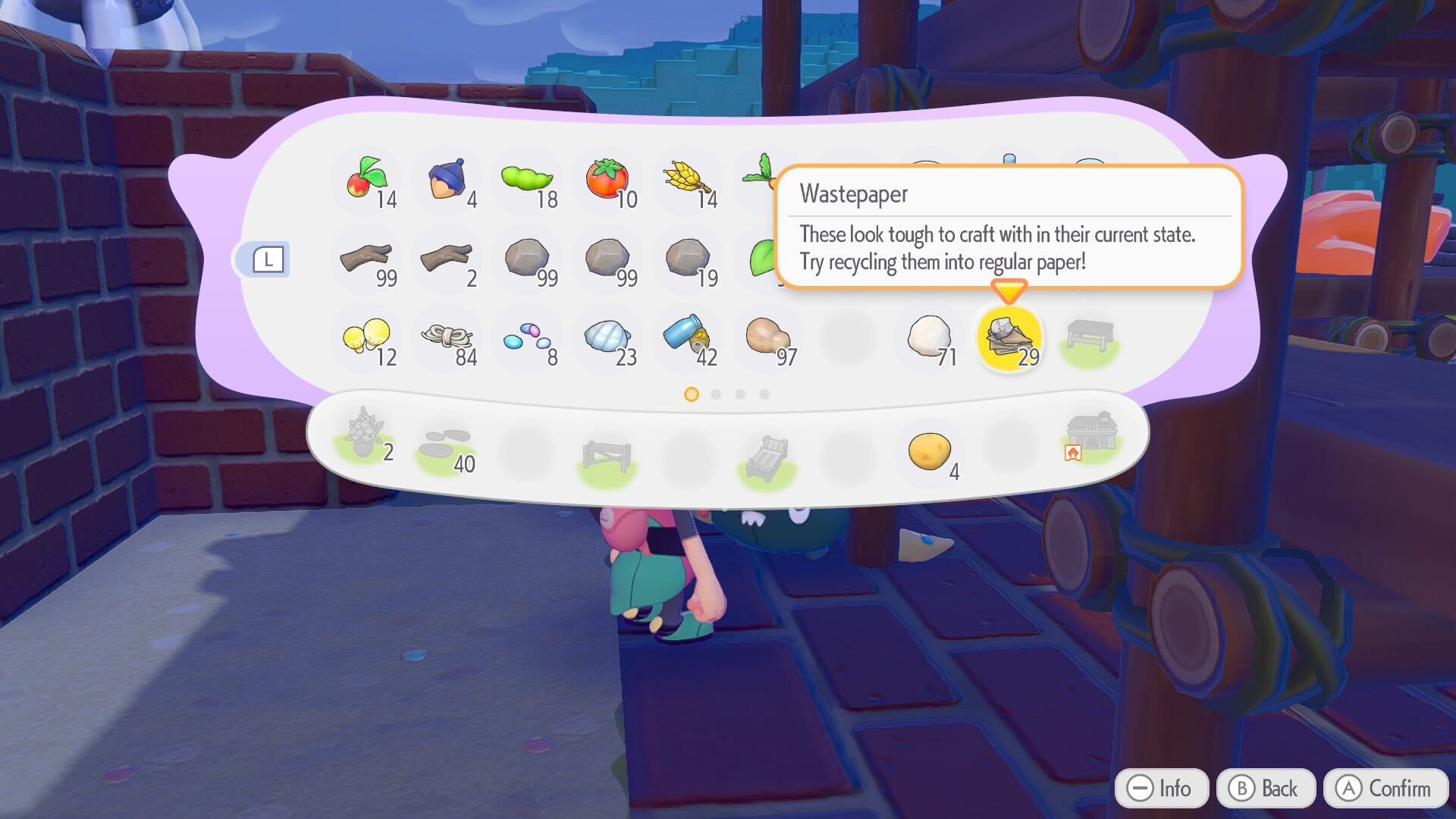
“Paper” shows up in a lot of crafts, but the item naming can be confusing. In the database you’ll often see both Paper and Papers, and many recipes that display “Paper” actually link to the Papers entry. If a recipe isn’t matching what you expect, check both.
- How-to guide: How to Get Paper in Pokopia
- Item pages: Wastepaper → Paper / Papers
- Recipe examples: Party popper, Letter
Wheat (farming + cooking loop)
Wheat is a “stability” material: once you can gather or grow it reliably, you reduce randomness in your cooking chain and can plan upgrades more predictably. Our local recipe dataset may not cover all cooking recipes yet, so Wheat can show as 0 even though it matters in normal play.
- How-to guide: How to Get Wheat in Pokopia
- Item page: Wheat
- Next step: use the recipe list + calculator to decide how much Wheat you actually need (so you don’t overfarm).
Squishy Clay (foundation for early building)
Squishy Clay is one of the best early materials to stockpile because it supports both utility crafts (tableware) and building progression. You’ll also eventually convert it into Bricks, so keeping a base clay buffer prevents waste.
- How-to guide: How to Get Squishy Clay in Pokopia
- Item page: Squishy clay
- Recipe examples: Mug, Plate
Brick (first “serious” building material)
Brick demand often arrives in spikes: one upgrade chain asks for a lot, then you don’t need it for a while. When you unlock the ability to convert clay into Bricks, process in batches — but don’t convert all your clay.
- How-to guide: How to Get Brick in Pokopia
- Item page: Brick
- Recipe examples: Brick steps, Brick wall
Concrete (infrastructure spike)
Concrete is typically a later unlock than Bricks, but it becomes an “infrastructure” material the moment it opens up — roads, steps, platforms, and stronger build parts. Plan a dedicated limestone-to-concrete loop so you’re not doing single trips.
- How-to guide: How to Get Concrete in Pokopia
- Item page: Concrete
- Recipe examples: Concrete steps, Asphalt road
Smooth Rock (small requests, annoying blocks)
Smooth Rock is a “pocket buffer” material. It doesn’t show up in the local recipe dataset yet, but players still get blocked by occasional requests and décor needs. The best approach is to pick it up whenever you’re already doing cave runs for other reasons.
- How-to guide: How to Get Smooth Rock in Pokopia
- Item page: Smooth Rock
How to use the database to farm smarter
- Start at
/database/itemsto search the material and open its detail page. - Jump to
/database/recipesto see what consumes your bottleneck materials. - If you’re planning Pokémon spawns, use
/database/habitatsand/database/pokemondexalongside materials so you can farm and attract Pokémon in the same region loop.
FAQ
Which materials should beginners farm first?
Prioritize Lumber (for storage and basic crafting) and keep a steady Twine buffer. After that, stockpile Squishy Clay and Wastepaper so you can pivot into Bricks and Paper without a full extra trip.
Which materials are safe to spend early?
Spend Lumber on storage and core utilities early (it pays back immediately). For Squishy Clay, avoid converting everything into Bricks — keep a base buffer so you can react to new recipes.
What is the rarest material in Pokopia?
Rarity depends on your current region and unlocks. Practically, the “rarest” material is usually whichever one is gated behind your next progression step (new region, new specialty, or new crafting station).
Next step
Open the recipes list, pick your next target build, and farm only what you’re missing: